A thistle in a small garden sounds like a strange ambition. Most of us spend years digging them out of lawns, and the word itself is shorthand for a plant that fights back. Yet the thistles worth growing are a different proposition: architectural, drought-proof, generous with nectar, and — with a couple of exceptions — surprisingly easy to keep in bounds. Grow one well and you get months of interest, seed heads that goldfinches strip bare in January, and a genuine piece of Scottish character by the back door.
Choosing the right thistles
Not every thistle belongs in a small plot. Creeping thistle (Cirsium arvense) and spear thistle (Cirsium vulgare) are listed as injurious weeds in the UK, and creeping thistle in particular spreads by deep, brittle roots that regenerate from the smallest fragment. Leave those to the wild corner of a field.
What you want instead are clump-forming perennials and well-behaved biennials that stay roughly where you put them.
- Cirsium rivulare 'Atropurpureum' — the best starting point for a small border. Crimson, shaving-brush flowers in early summer, clump-forming, about a metre tall, and content in ordinary or even damp soil. Rarely needs staking.
- Melancholy thistle (Cirsium heterophyllum) — softer than most, with purple flowers on upright stems and a tolerance of light shade. It spreads slowly by rhizomes, so give it room to make a small colony.
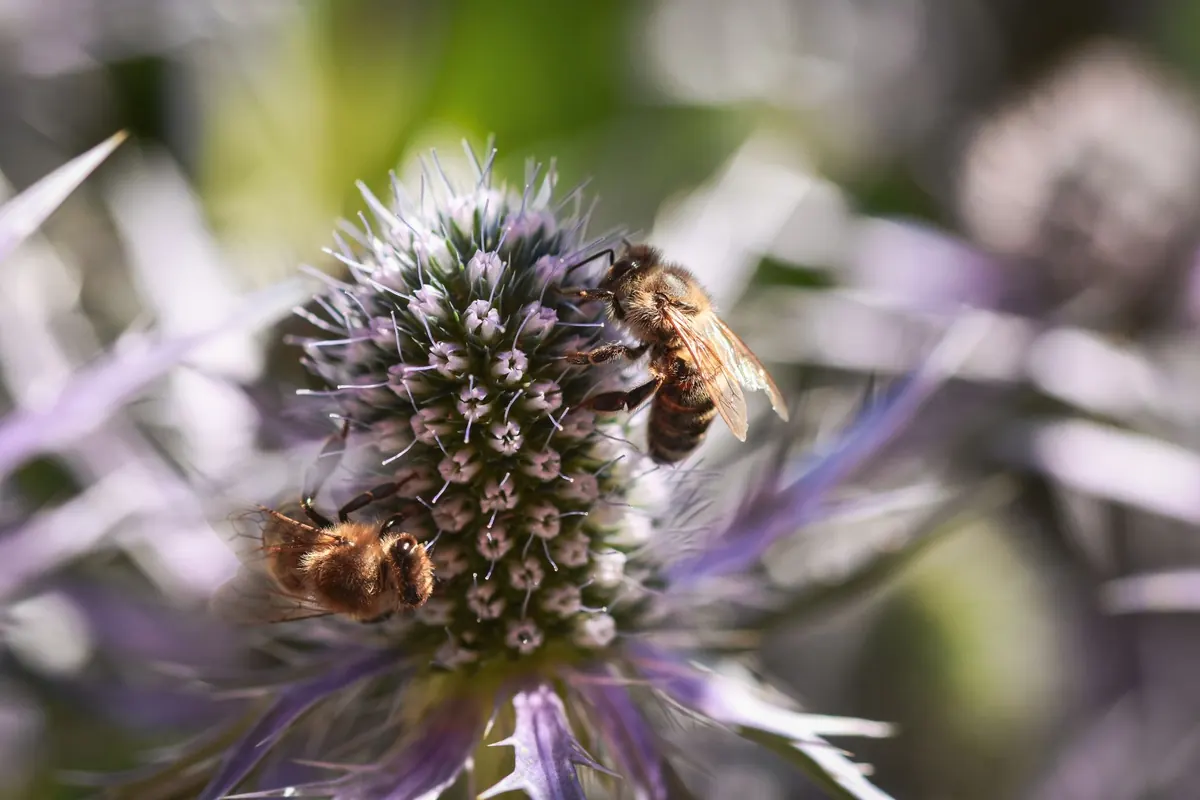
- Globe thistle (Echinops bannaticus or E. ritro) — steel-blue spheres on grey stems, superb in gravel, excellent for cutting and drying, and constantly busy with bees. Not a true Scottish thistle, but it delivers the same silhouette without the spines.
- Cotton thistle (Onopordum acanthium) — the silvery giant most often named as the Scottish emblem. Biennial: a rosette one year, a two-metre flower spike the next, then it dies. Sow it where you want it to flower.
- Milk thistle (Silybum marianum) — glossy, white-veined leaves and fat purple flowers. Annual or biennial, dramatic in a pot, and just as happy in gravel.
If you have room for one more, a cardoon (Cynara cardunculus) brings wonderful grey architecture, though it needs a sheltered spot and a fair amount of space. Two or three thistles is plenty in a small garden; they are bold plants, and a crowd of them looks like a building site.
Sowing and planting
Biennials are best sown where they are to flower, because their taproots hate disturbance. Scatter seed on raked soil between May and July, cover lightly, and keep the patch damp until seedlings appear — usually a fortnight or so in warm weather. Thin them to 45–60cm apart while they are still small, and resist the urge to move the spare seedlings. One that has already made a taproot will sulk, or simply die.
If you want more control, sow into deep pots or root trainers and plant out while the plants are young. Perennials such as Cirsium rivulare and the globe thistles can be sown in spring or autumn, or bought as plants and set out in March or September, when the soil is warm and moist but not baking.
When planting out, a simple routine works:
- Pick the sunniest spot you can spare — six hours or more in summer.
- Loosen the soil to a spade's depth and fork in grit if it holds water.
- Set the plant so the crown sits level with the surface, never buried.
- Water in well, then mulch around — not over — the crown.
- Label it, or you will hoe it out as a weed in April.
Soil, sun and spacing
Thistles evolved on rough, free-draining ground, and that is what suits them. Average to poor soil, full sun, and drainage that keeps winter wet away from the roots. On heavy clay, plant on a slight mound or fork in horticultural grit before you plant.
Rich soil is the enemy. Feed a thistle and you get sappy, floppy growth that collapses in the first gale. Allow 45–60cm between perennials and closer to 90cm for cotton thistles, which can reach two metres and cast a serious shadow. In an exposed garden, plant tall stems against a fence or among grasses so they have something to lean into; a single stake and a soft tie in June saves a snapped stem in July.
Watering, feeding and everyday care
Newly planted thistles need water through their first summer. A thorough soak once a week beats a daily sprinkle, and it encourages roots to go down rather than spread sideways. After that, most will look after themselves; deep roots and grey, felted leaves are built for dry spells. In pots, they depend on you entirely.
Water at the base, in the morning if you can. Wet foliage overnight invites powdery mildew, the one problem cotton thistles reliably attract. If a plant is crowded and mildewed by August, cut it back and let it go — the flowers have already done their work.
Skip the fertiliser. A handful of garden compost in spring is ample. Aphids will find the flower stems; either squirt them off with water or leave them for ladybirds and hoverflies, which arrive on thistles remarkably quickly.
Aftercare through the year
Deadheading is how you keep control. Cut fading flowers back to the base of the stem and many thistles will stop, or throw a smaller second flush; leave a few seed heads standing for the birds. Self-seeding is the main thing to manage in a small garden, so hoe or pull rosettes in spring while they are still the size of a saucer, before the taproot takes hold.
Handle everything with gloves and long sleeves — even the soft species get prickly near the base. In autumn, perennials can be cut to the ground, but leaving the stems standing over winter shelters insects and looks far better than bare soil. Cut them down in February or March, just as new growth appears.
- Spring: pull unwanted seedlings, mulch, stake anything tall.
- Summer: water in dry spells, deadhead most flowers, leave a few to set seed.
- Autumn: collect seed from your best plant, leave stems for wildlife.
- Winter: check pots are not sitting in water; tidy and cut back in late winter.
Thistles in pots
Deep pots are essential — 30cm at minimum, filled with a gritty, free-draining compost and topped with a layer of gravel. Biennials such as milk thistle and cotton thistle look superb grown this way: one plant, one pot, and no seedlings to chase around the border. Water until it runs from the drainage holes, then wait until the top few centimetres of compost are dry before watering again. Over winter, stand pots on feet or bricks so they never sit in a puddle.
Keeping it manageable
Three rules cover almost everything. Choose clump-formers or biennials rather than creeping weeds. Plant in sun with sharp drainage, and never enrich the soil. Then practise restraint: water only until established, deadhead most flowers, and wear gloves.
Do that, and a thistle stops being a nuisance and becomes one of the most rewarding plants in a small garden — spiky, statuesque, and working hard for the bees from June until the first hard frost.
Photo: Alexas Fotos / Pexels