The north-facing kitchen window gets a bad press. It never catches the sun, it collects washing-up splashes, and it is usually where the rubber gloves live. It is also one of the most useful growing spaces in a British house. Direct sun is not what mint, parsley and chives want. Soft, steady daylight and cooler temperatures suit them, and because the compost dries out slowly, a north sill forgives the occasional forgotten watering.
What a north-facing window actually gives you
No direct sun, but plenty of daylight — the difference matters. A north sill still receives hours of bright, indirect light through spring and summer. What it lacks is intensity, so plants grow more slowly and stay smaller. For the herbs below, that is exactly right. For rosemary and thyme, it is fatal.
Light falls away quickly with distance, so keep pots within about 15cm of the glass. Net curtains, half-closed blinds, a deep frame and a thick window recess all cut the light further, as does a hedge or street tree outside. If your sill is shaded and deep, raise the pots on an upturned bowl or a small crate to bring them closer to the panes.
Then check what is underneath. A radiator below the sill pushes warm, dry air straight up through the pots, which dries compost fast and scorches leaves. Move the pots to a small table beside the window, or stand them on a trivet or folded towel. In winter, wipe condensation off the sill once a week so pots are not sitting in a puddle.
The herbs worth growing on a shaded sill
Reliable choices
- Mint — spearmint, apple mint or Moroccan mint. The most forgiving herb you can grow indoors. Keep each one in its own pot, because it spreads underground and will smother anything beside it.
- Flat-leaf parsley — good flavour and a long cropping season. It has a taproot, so give it a deeper pot than you think you need.
- Curly parsley — same growing needs, slightly tougher leaves and slightly more tolerant of neglect.
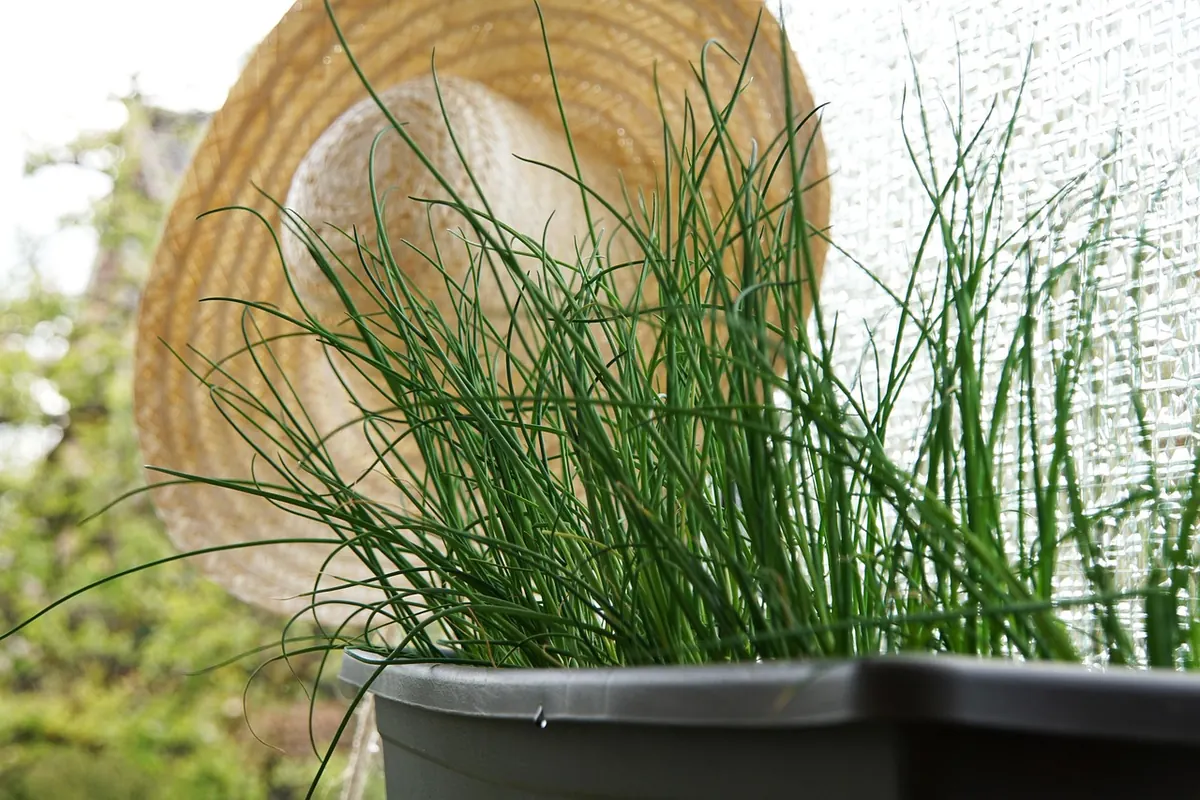
- Chives and garlic chives — happy in shade, easy to cut and regrow. The flowers are edible too.
- Chervil — soft, ferny leaves with a mild aniseed flavour. It actually prefers cool, shaded spots and does not like drying out.
- Lemon balm — quick to establish and useful for teas. Give it room, as it grows wide.
- Wild rocket — smaller, sharper leaves than the salad type, and slower to bolt in shade.
Not worth the trouble
Basil, rosemary, thyme, oregano, sage, lavender and tarragon will all sulk on a north sill. They stretch, pale, lose flavour and attract pests. Save those for a sunny south or west window, or a sheltered spot in the garden.
What you need before you start
- Three to five pots, 15–20cm across, with drainage holes. Go deeper for parsley and chives.
- Saucers or a shallow tray to catch drips.
- Peat-free multipurpose compost, plus a couple of handfuls of perlite or horticultural grit for drainage.
- A small watering can with a fine rose, or a bottle with a narrow spout.
- Liquid seaweed feed.
- Scissors or herb snips, labels and a pencil.
Optional but useful: a gravel top-dressing to keep the compost surface dry, sticky traps for fungus gnats, and a cheap spray bottle for rinsing pests off leaves.
Planting up in five steps
Buy young plants or supermarket living herbs — they give you a head start and cost very little. Sowing seed from February to March also works, but it is slower and needs more patience.
- Water the plants in their original pots an hour before you start and let them drain.
- Fill your pot to about two-thirds with compost mixed with a couple of handfuls of grit. Leave 3cm of clear space below the rim for watering.
- Ease the plant out and split the clump into two or three pieces with your fingers. Shop-bought herbs are grown densely, and planting the whole clump gives you spindly, competing stems.
- Set one piece per pot at the same depth it was growing before, firm the compost gently and water until it runs out of the bottom. Let it drain before it goes on the sill.
- Label the pot and put it in place. Keep mint entirely on its own, and cut new chives back to about 5cm to push fresh growth.
The routine that keeps them alive
Watering is where most windowsill herb gardens fail, and the problem is usually too much rather than too little. Push a finger 2cm into the compost. If it feels damp, wait a day. If it is dry, water slowly until it drains through, then tip the saucer out twenty minutes later. A north sill dries out slowly, so twice a week is often plenty, and less in winter.
Turn each pot a quarter turn every week. Light arrives from one direction only, and without turning, stems lean towards the glass and the far side goes bare.
Feed lightly. Half-strength liquid seaweed every three or four weeks from March to September is enough, and nothing at all over winter. Herbs grown for their leaves do not need rich compost, and overfeeding produces soft, tasteless growth.
Harvest little and often, because cutting is what keeps these plants productive:
- Parsley — snip the outer stems at the base and leave the centre to keep growing.
- Chives — cut leaves about 3cm above the compost, never more than a third of the clump at once. Pinch out flower buds if you want leaves rather than blooms.
- Mint, lemon balm and chervil — pinch the tips just above a pair of leaves to encourage branching.
Common problems on a kitchen sill
Pale, spindly growth. Not enough light. Move the pot closer to the glass, keep turning it, and stop feeding until it recovers.
Green mould on the compost surface. Too wet, with still air around it. Scrape off the top centimetre, water less, and open the window for ten minutes a day.
Tiny black flies. Fungus gnats, which breed in damp compost. Top-dress with dry gravel, let the surface dry between waterings, and use sticky traps for the adults.
Greenfly or whitefly. Rinse them off with a gentle spray of water over the sink. Check any new plant carefully before it joins the group, because infestations usually arrive with it.
Yellowing lower leaves and a collapsing plant. Almost always root rot from standing in water. Repot into fresh compost, trim any soft brown roots and water more sparingly.
Parsley flowering, then dying back. Parsley is a biennial. It bolts in its second year and finishes, so keep a fresh pot coming on.
What to expect, and how to keep it going
Be realistic about the harvest. A 15cm pot of parsley will give you a garnish most weeks, chives a small handful every fortnight, and mint as much as you can use in a jug of water or a cup of tea. This is not a replacement for the greengrocer, and it does not need to be. The point is a snip of something fresh while the kettle boils.
To keep the sill stocked, sow or buy a new pot of parsley in late summer for winter leaves, take mint cuttings in a glass of water — they root in a fortnight — and divide crowded chive pots in spring. Three pots on the go will always out-perform one. And when a pot gives up, tip it onto the compost heap and start again. That is not failure; it is just how windowsill growing works.
Photo: gartengoere / Pixabay